...............................BACK TO LINKS............................ BACK TO MAIN
HOLES IN THE POOL:
The entire structure ( cement shell) of the pool usually will not leak, with the exception of a crack in the wall, most leaks can be found in the places where a pipe or the
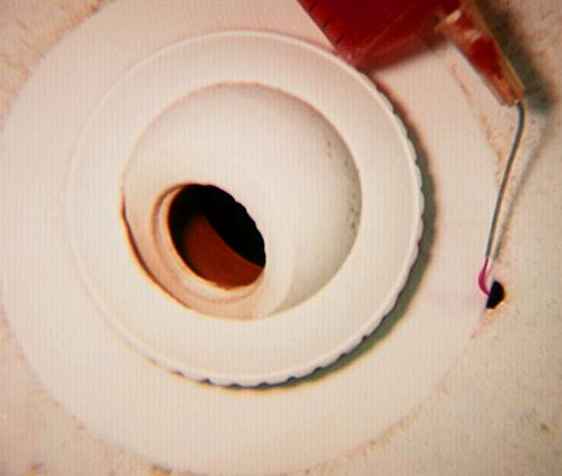
fitting protrudes through the cement wall. This worn piece of cement around the jet face caused the pool to drop 1/2" per day. It is best to check every jet in the pool as you work your way around it.
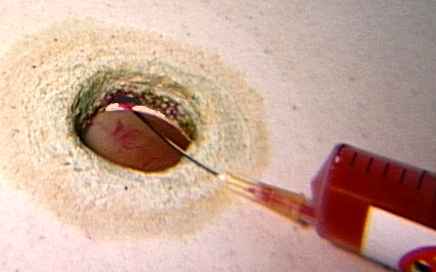
But not all jets are the same; this is a jet in the form of a pipe running straight through the wall, With the leak on the top of the pipe, hidden by a lip of cement. Leaks like this can only be seen by swimming in the pool or with a mirror from the surface.
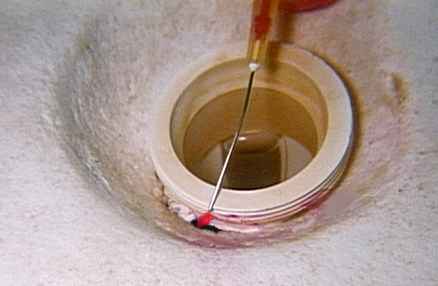
This pool had been refinished (notice the recessed jet fitting). This leak was hidden under the jet face cover. It had to be unscrewed to see this leak.

Even in the most complex pool setups the jet leak is a common problem. This picture is a bottom jet of a self- cleaning pool/spa combination. It would of cost the homeowner $250- $700 to have the plumbing system tested. The rule is: get some simple tools, look around your pool for 10-20 minutes, you might find something easy.
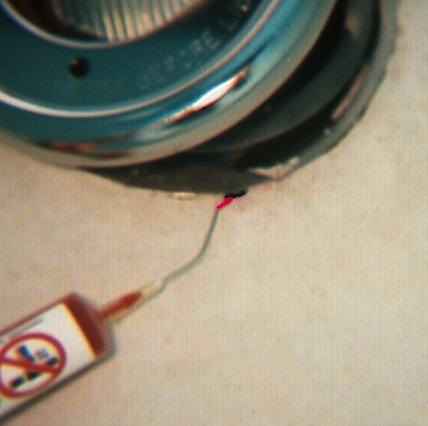
This leak is around the pot the light sits in; these leaks are usually on the bottom due to the way the cement is poured on top of the fitting. More on lights Remember to have all the power to the light turned of before you remove the light.
Bottom drain pots can also leak in this manor: around the outside of the pot. This leak usually appears as a thin leak between the plastic and the cement. More on bottom drains. To check and repair the bottom drain you need a weightbelt and scuba tank.
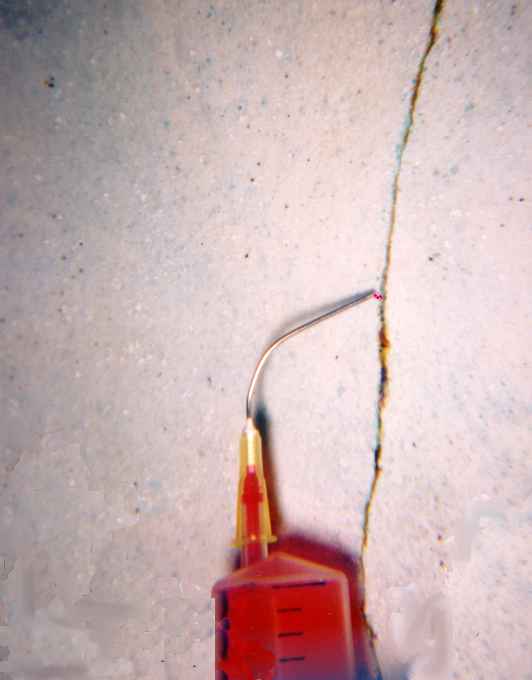
Cracks in a pool wall usually start in the corner of the skimmer, and run vertically down the pool wall. These leaks can be so fine that they clog up with sediment when the pump is off. Brush away any sediment, and then carefully place the needle tip directly on the crack in several places along its path. A slight draw will be noticed on the stronger leaks.
Unfortunately there is little cure for this problem and most cracks will continue to grow due to the massive forces that are involved. Even expensive repairs may only last a few years: refinishing the pool may last until the pool is refilled.
We suggest carving a "groove" or "V" into the crack and use 2 part underwater epoxy (with the pool full) or a marine sealent/adheasive (with the pool empty and the crack dried for a few days). There are expensive methods of "epoxy injection" which claim to repair the structure bact to monolithic state: I don't 100% buy that, but if you can afford it look in the yellow pages.
BACK TO LINKS..............BACK TO MAIN ......................TOP